Philippines

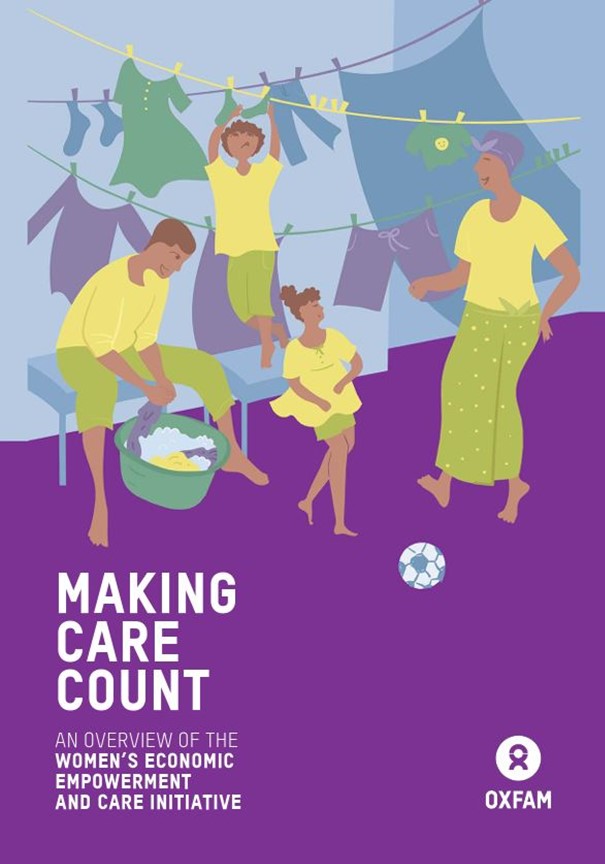
Making care count: An overview of the Women’s Economic Empowerment and Care Initiative

November 18, 2020

This overview document aims to highlight the approaches taken and lessons learned on unpaid care that Oxfam has implemented in collaboration with partners in sub-Saharan Africa and Asia.
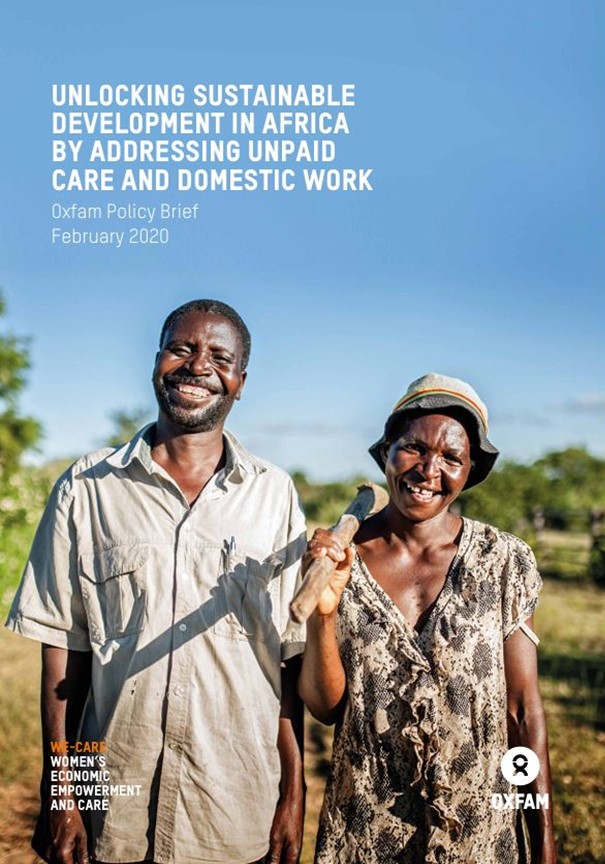
Unlocking sustainable development in Africa by addressing unpaid care and domestic work

February 3, 2020

Across Africa, ambitions to achieve inclusive and sustainable development are being undermined by inadequate investment in the care economy. Women and girls are providing millions of hours of unpaid care and domestic work (UCDW) – a provision which props up the economy and underpins society, yet remains under-recognized, undervalued and under-invested in. 

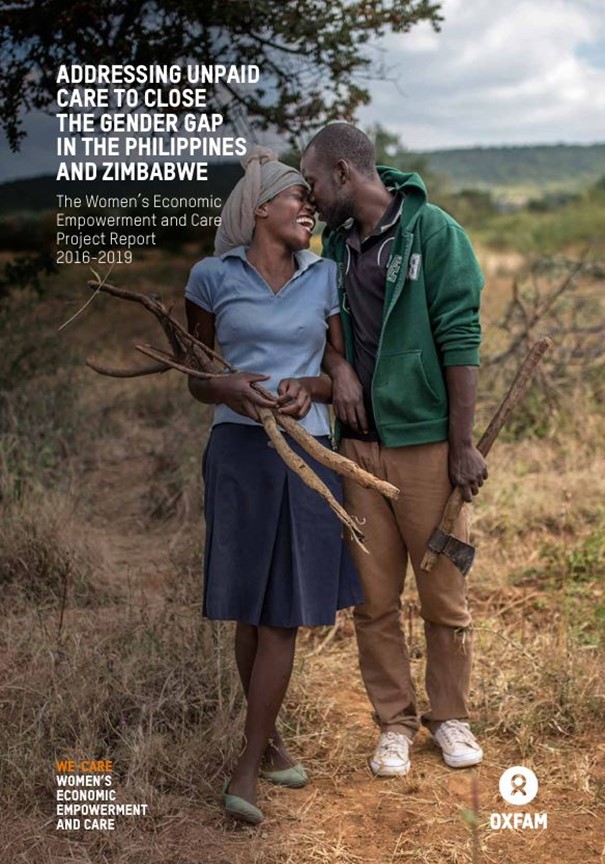
Addressing unpaid care to close the gender gap in the Philippines and Zimbabwe: The Women’s Economic Empowerment and Care Project Report (2016–2019)

January 17, 2020

The report celebrates the successes of the project and the communities the project has supported, and recognizes the unique contributions of its partners in the Philippines and Zimbabwe. It highlights challenges the project has faced and overcome and documents key lessons to guide future unpaid care programming. 

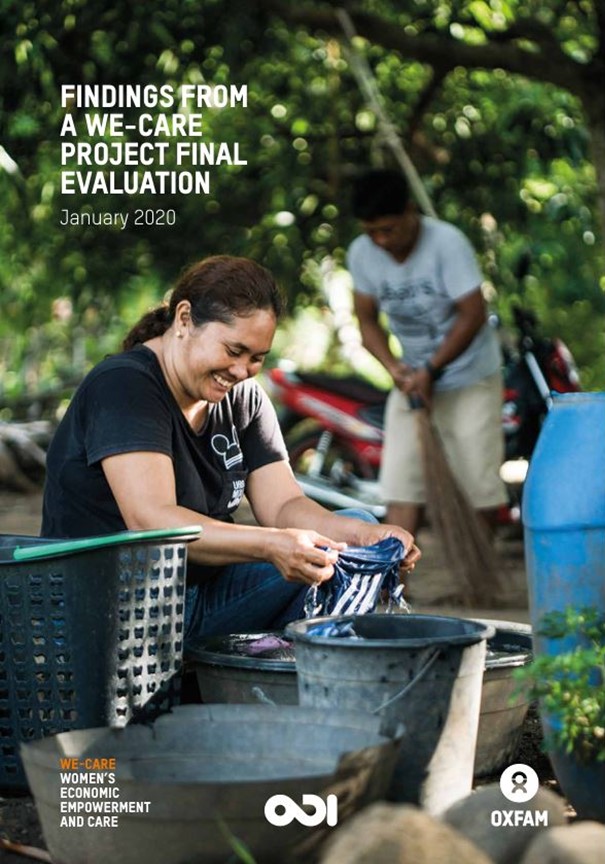
Findings from a WE-Care Project final evaluation

January 17, 2020

The evaluation findings show that in two years of implementation, the project was successful in reducing women’s time on care tasks and in promoting recognition of unpaid care in policies at local level. It also made considerable progress towards more gender-equitable distribution of care work, contributing towards shifting both norms and behaviour around unpaid care and domestic work.

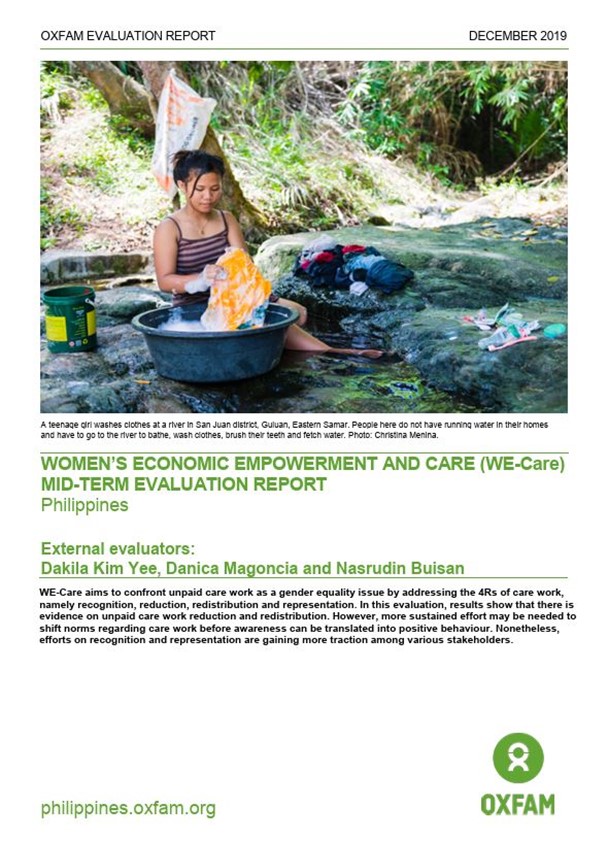
Women’s Economic Empowerment and Care Mid-Term Evaluation Report: Philippines

December 9, 2019

Overall, the evaluation finds that there is evidence unpaid care work is being reduced and redistributed. However, more sustained effort may be needed to shift social norms regarding who performs care work before awareness can be translated into positive behaviour. Nonetheless, efforts on recognition and representation are gaining more traction among people in the community.

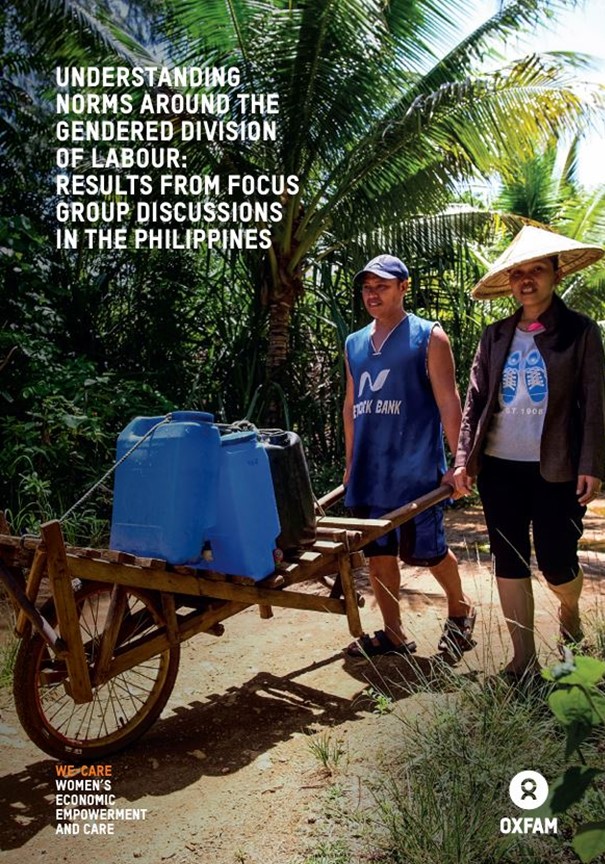
Understanding norms around the gendered divisions of labour: Results from focus group discussions in the Philippines

October 28, 2019

This report summarizes the main findings from the qualitative research conducted as part of the WE-Care (Women’s Economic Empowerment and Care) programme in the second half of 2017 to support on the identification of the main social norms related to unpaid care and domestic work.

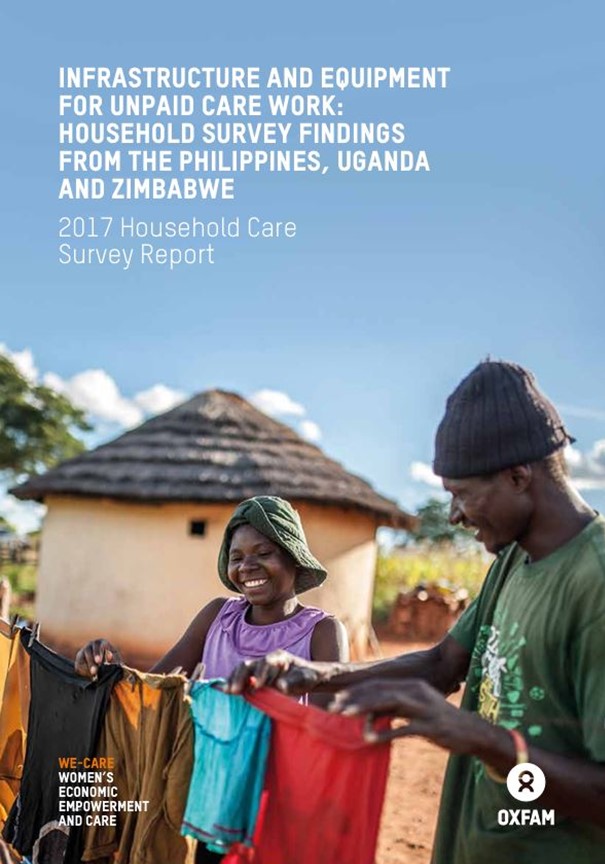
Infrastructure and equipment for unpaid care work: Household survey findings from the Philippines, Uganda, and Zimbabwe

March 26, 2018

In 2017, Oxfam’s Women’s Economic Empowerment and Care (WE-Care) initiative conducted a Household Care Survey (HCS), collecting data in the Philippines, Uganda and Zimbabwe, to inform the design of public policies and local development programmes. The study tests which infrastructure, equipment and other factors influence care-work patterns.

Factors and norms influencing unpaid care work: Household survey evidence from five rural communities in Colombia, Ethiopia, the Philippines, Uganda, and Zimbabwe

November 15, 2016

In order to address ‘heavy’ and ‘unequal’ care work and to raise the profile of care as a cross-cutting development issue, Oxfam and its partners implemented a baseline Household Care Survey (HCS) in five countries in which the WE-Care project was active.