unpaid care and domestic work

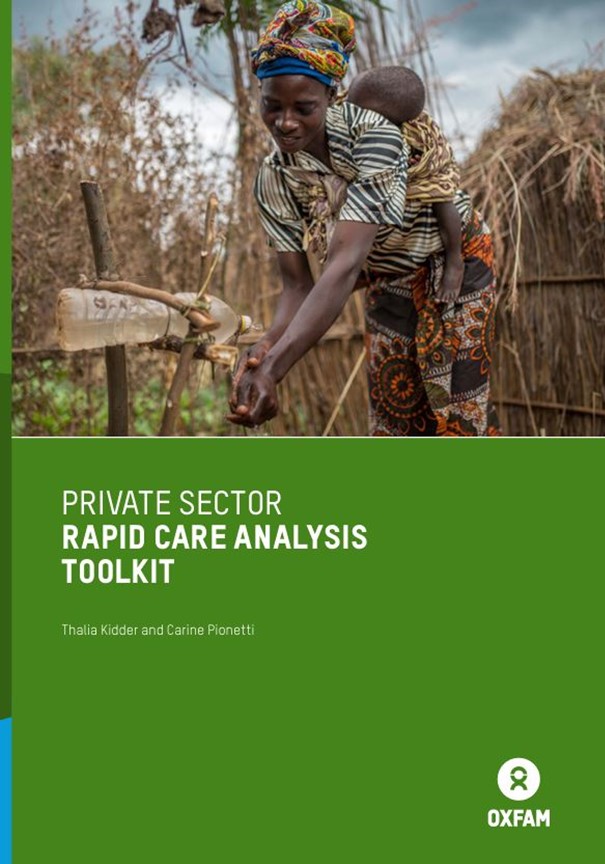
Private Sector Rapid Care Analysis Toolkit

October 29, 2024

This PS RCA Toolkit complements the original Participatory Methodology: Rapid Care Analysis that focuses on community and local government roles in addressing women’s heavy and unequal share of unpaid care and domestic work. The toolkit also complements broader gender equity audits and strategies for business.
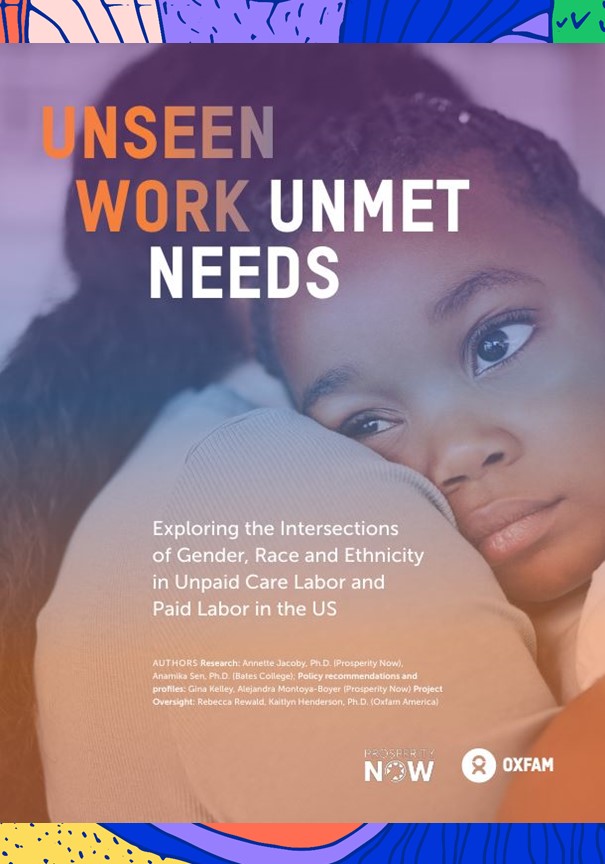
Unseen work, unmet needs: Exploring the intersections of gender, race, and ethnicity in unpaid care labor and paid labor in the US

April 25, 2024

The study seeks to bring visibility to this work and underscore its significance in economic policy. The urgency of the project is highlighted by the recent social and economic impacts of the COVID-19 pandemic, which has significantly affected unpaid care work, altering its distribution among men and women as well as across racial and ethnic groups. The paper also brings in the voices of the people who are holding crucial caregiving roles in their communities so readers can hear from individuals directly.

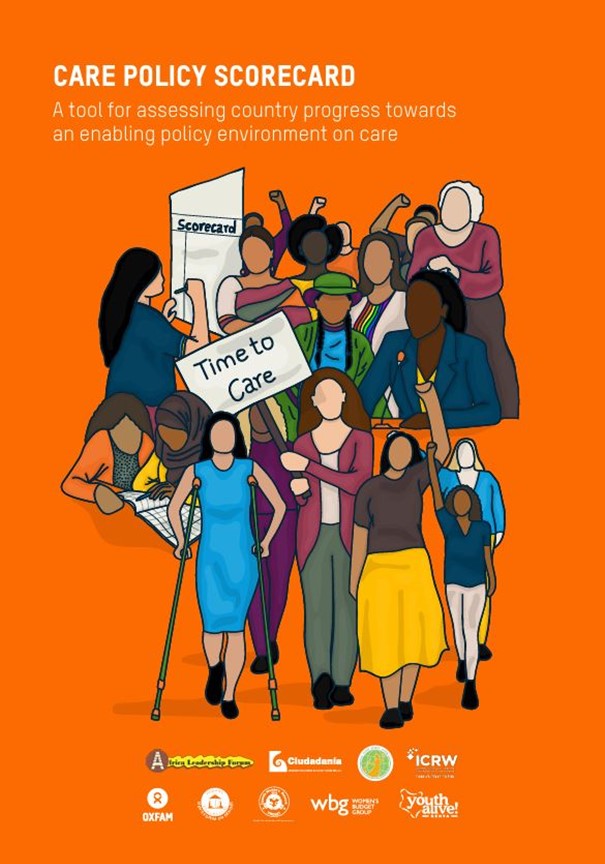
Care Policy Scorecard: A tool for assessing country progress towards an enabling policy environment on care

September 20, 2021

The Care Policy Scorecard provides a practical tool to assess and track the extent to which government policies related to care are adopted, budgeted for and implemented, and the extent to which they have a transformative effect on care. It can be used at the national or sub-national level. The Scorecard is intended to be used by civil society, government and academia alike.

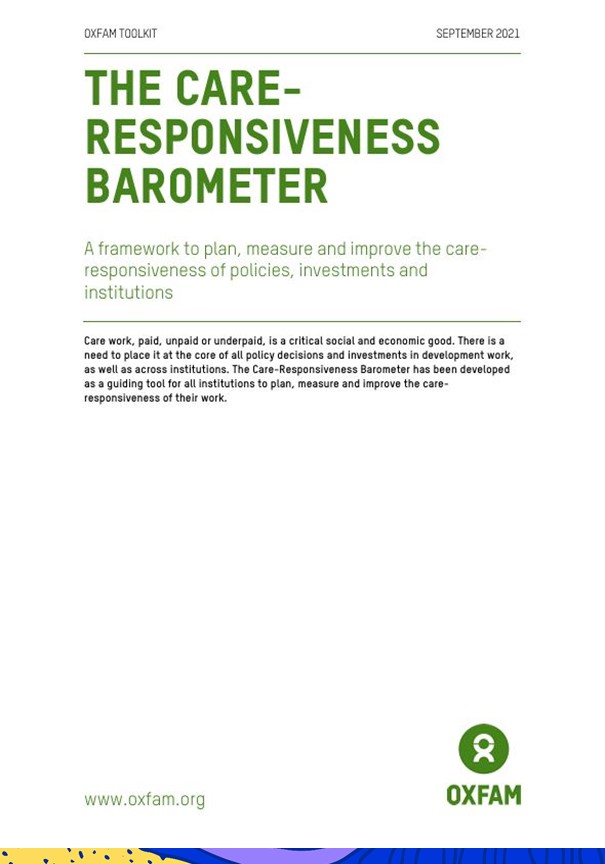
The Care-Responsiveness Barometer: A framework to plan, measure, and improve the care-responsiveness of policies, investments, and institutions

September 13, 2021

Care work, paid, unpaid or underpaid, is a critical social and economic good. There is a need to place it at the core of all policy decisions and investments in development work, as well as across institutions. The Care-Responsiveness Barometer has been developed as a guiding tool for all institutions to plan, measure and improve the care-responsiveness of their work.

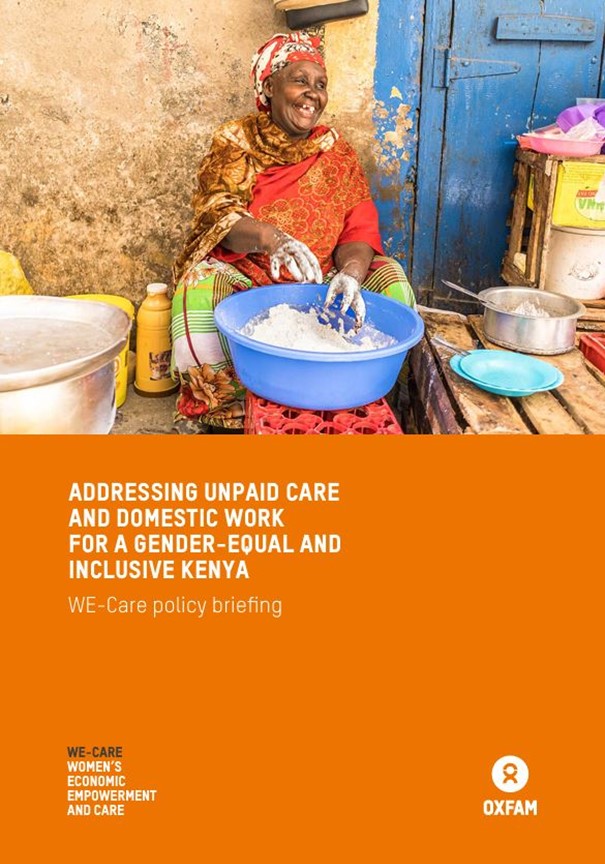
Addressing unpaid care and domestic work for a gender-equal and inclusive Kenya

April 13, 2021

This policy brief outlines why unpaid care work is a critical development, economic and gender equality issue for Kenya. It draws on two sets of evidence from Oxfam’s Women’s Economic Empowerment and Care (WE-Care) programme, which explore the impact of women and girls’ heavy and unequal unpaid care responsibilities both before and during COVID-19.

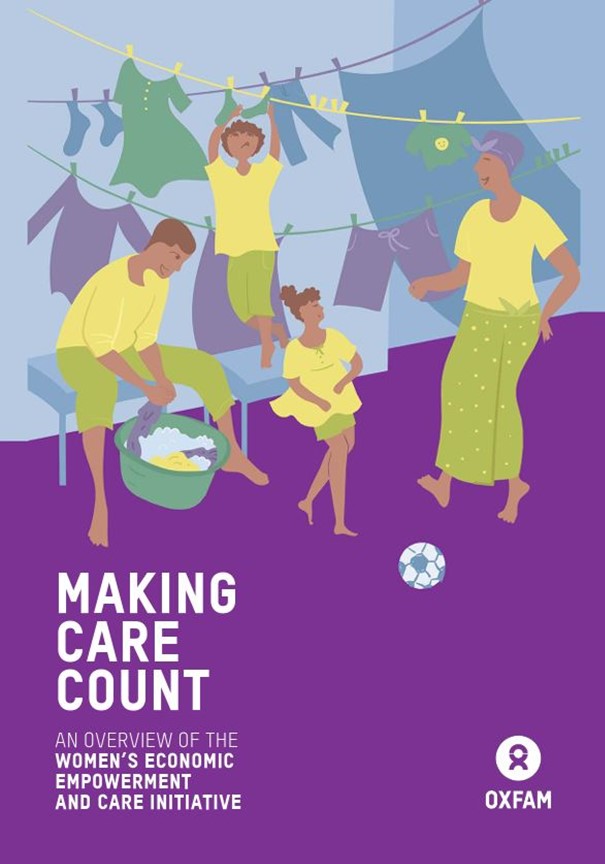
Making care count: An overview of the Women’s Economic Empowerment and Care Initiative

November 18, 2020

This overview document aims to highlight the approaches taken and lessons learned on unpaid care that Oxfam has implemented in collaboration with partners in sub-Saharan Africa and Asia.

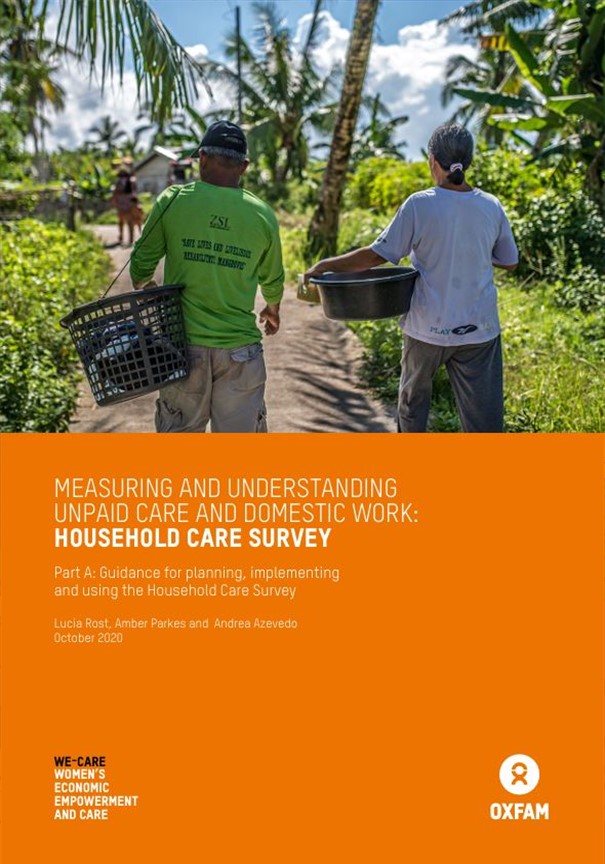
Measuring and understanding unpaid care and domestic work: Household Care Survey Toolkit

October 30, 2020

This toolkit provides guidance on using Oxfam’s Household Care Survey (HCS) methodology, which was developed by Oxfam as part of the WE-Care initiative to transform the provision of unpaid care and domestic work (UCDW).

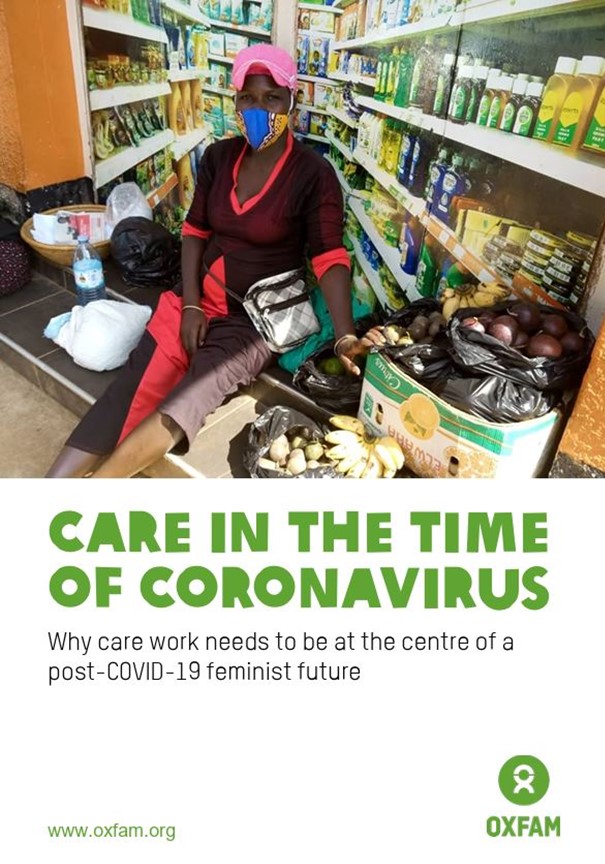
Care in the time of coronavirus: Why care work needs to be at the centre of a post-COVID-19 feminist future

June 25, 2020

New research by Oxfam and partners reveals that while COVID-19 and the related containment efforts have caused increases in women’s – and men’s – unpaid care workloads, women are still doing the bulk of this work.

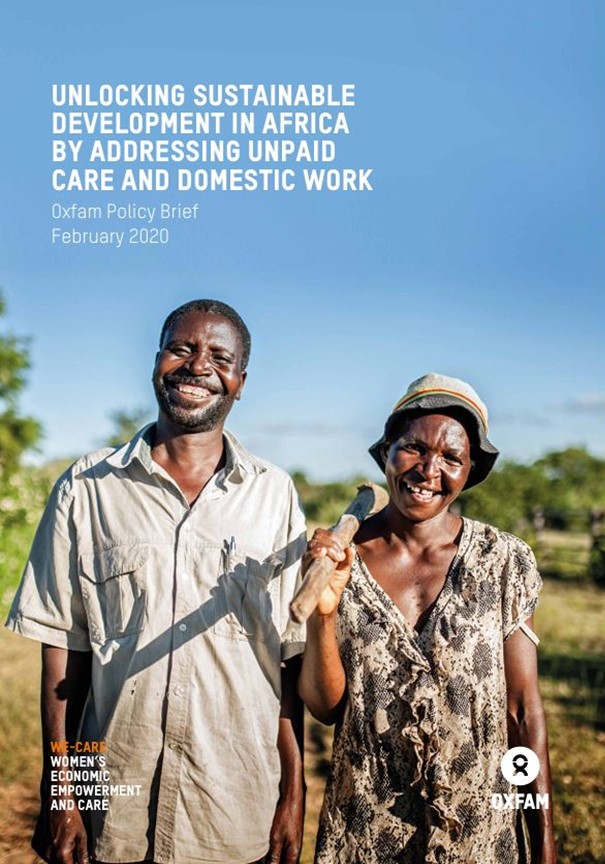
Unlocking sustainable development in Africa by addressing unpaid care and domestic work

February 3, 2020

Across Africa, ambitions to achieve inclusive and sustainable development are being undermined by inadequate investment in the care economy. Women and girls are providing millions of hours of unpaid care and domestic work (UCDW) – a provision which props up the economy and underpins society, yet remains under-recognized, undervalued and under-invested in. 

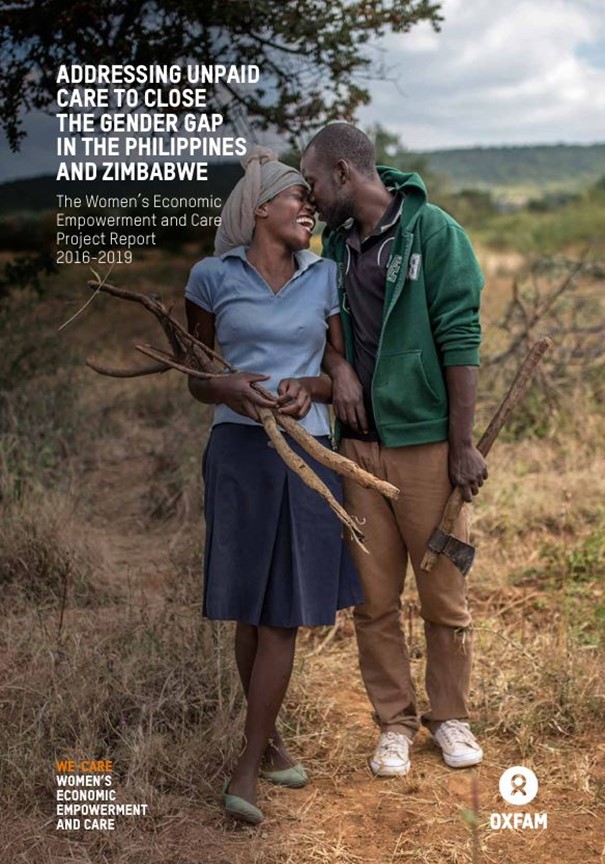
Addressing unpaid care to close the gender gap in the Philippines and Zimbabwe: The Women’s Economic Empowerment and Care Project Report (2016–2019)

January 17, 2020

The report celebrates the successes of the project and the communities the project has supported, and recognizes the unique contributions of its partners in the Philippines and Zimbabwe. It highlights challenges the project has faced and overcome and documents key lessons to guide future unpaid care programming.