unpaid care work

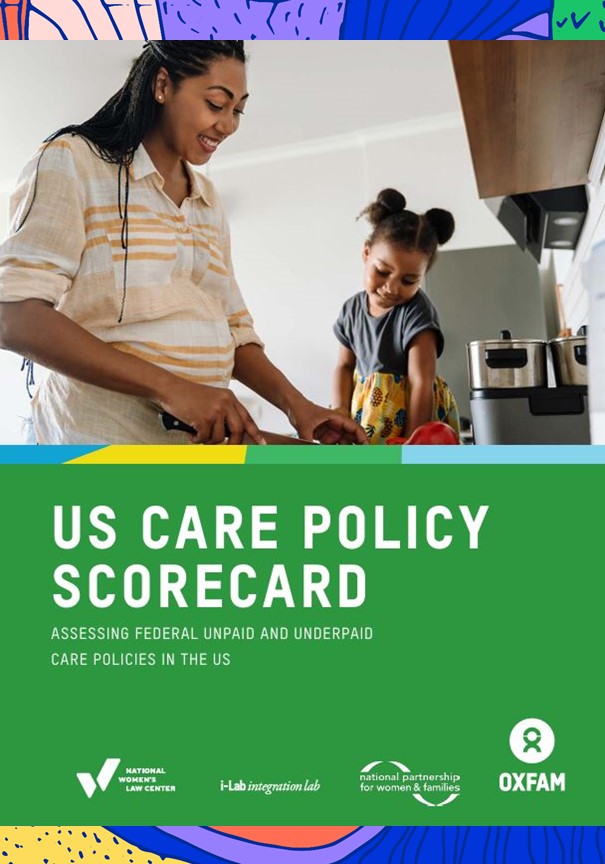
US Care Policy Scorecard: Assessing federal unpaid and underpaid care policies in the US

July 19, 2023

The US Care Policy Scorecard demonstrates that federal UUCW policies are severely lacking, and the needs of caregivers and care workers are not being met by federal policies. It is women of color and immigrant women who are most harmed by the US’s failure to fully support working families, caregivers, and care workers.

The Care Policy Scorecard: A new tool to shift progress towards a caring economy

August 31, 2022

The Scorecard helps care advocates to assess how care-related policies are adopted, budgeted for, and implemented by governments, and to what extent they can transform the social organisation of care. The paper also includes preliminary results from the application of this tool in Kenya, and shares learnings from the use of the findings for national-level care policy advocacy.

Caring under COVID-19: How the pandemic is (and is not) changing unpaid care and domestic work responsibilities in the United States

July 29, 2020

The study reveals findings from a rapid poll exploring the gendered and racial impacts of COVID-19 on unpaid care work, which was part of MenCare: A Global Fatherhood Campaign. The report demonstrates how COVID-19 has brought an unprecedented crisis of care in the United States, with a particular workload being taken on by women as a group, and Black, Latinx, and Asian individuals.

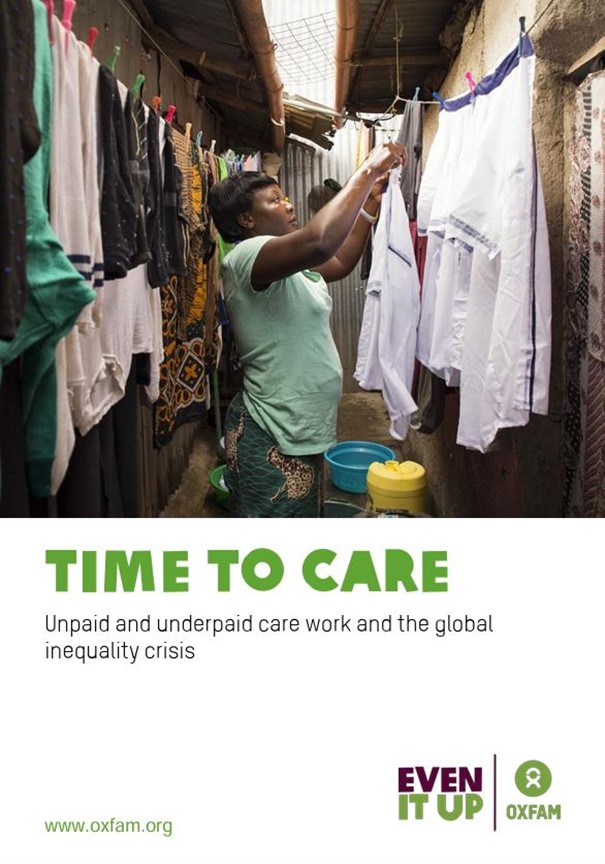
Time to care: Unpaid and underpaid care work and the global inequality crisis

January 20, 2020

Economic inequality is out of control. In 2019, the world’s billionaires, only 2,153 people, had more wealth than 4.6 billion people. This great divide is based on a flawed and sexist economic system that values the wealth of the privileged few, mostly men, more than the billions of hours of the most essential work – the unpaid and underpaid care work done primarily by women and girls around the world.

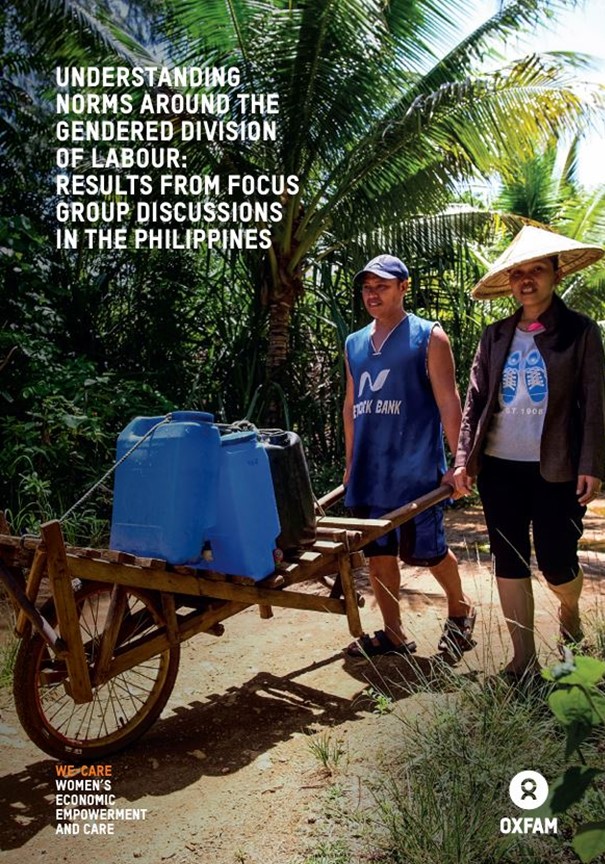
Understanding norms around the gendered divisions of labour: Results from focus group discussions in the Philippines

October 28, 2019

This report summarizes the main findings from the qualitative research conducted as part of the WE-Care (Women’s Economic Empowerment and Care) programme in the second half of 2017 to support on the identification of the main social norms related to unpaid care and domestic work.

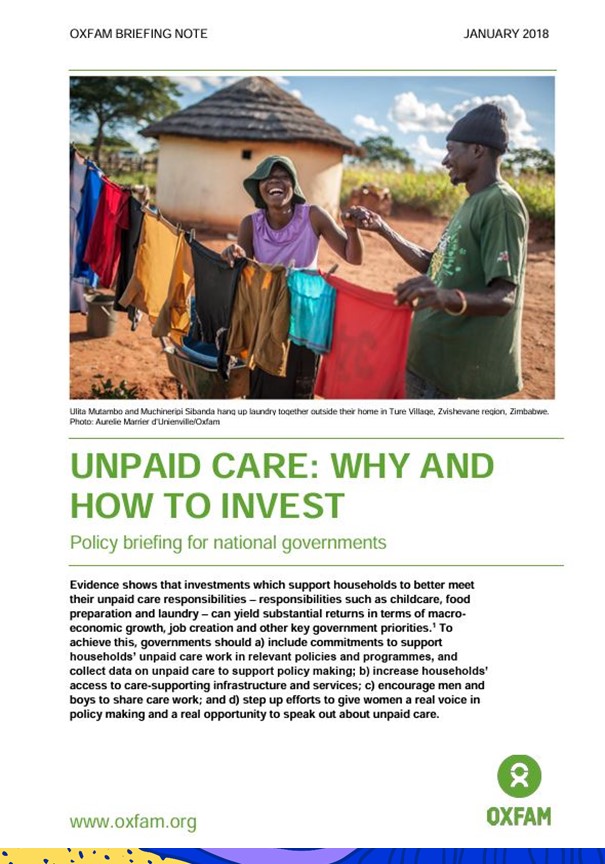
Unpaid care: Why and how to invest

January 12, 2018

Investments which support households to better meet their unpaid care responsibilities – such as childcare, food preparation and laundry – can yield substantial returns in terms of macro-economic growth, job creation and other key government priorities.

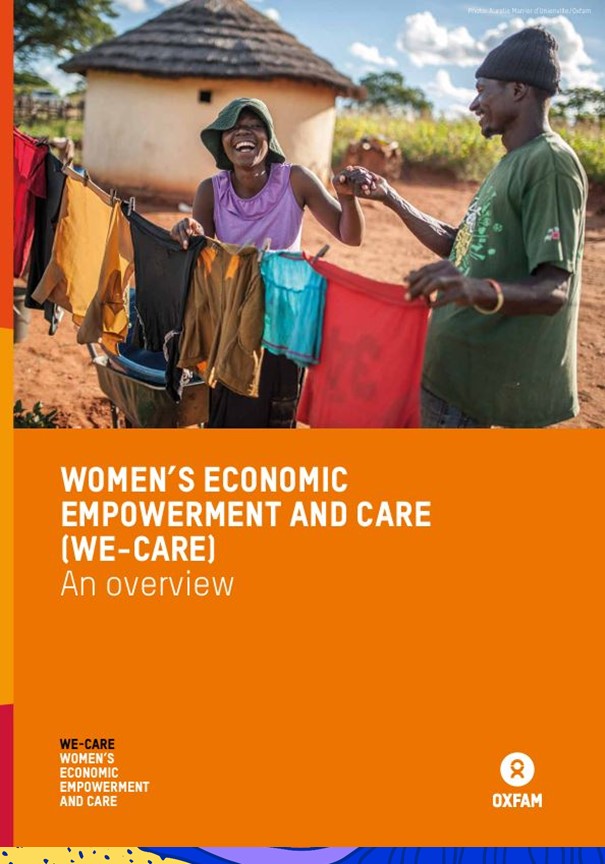
Women’s Economic Empowerment and Care (WE-Care): An overview

August 8, 2017

WE-Care was launched in 2014 in five countries – Colombia, Ethiopia, The Philippines, Uganda and Zimbabwe – and components of the approach are now being implemented across numerous Oxfam programmes covering livelihoods, health rights, women’s leadership and youth empowerment. 

Factors and norms influencing unpaid care work: Household survey evidence from five rural communities in Colombia, Ethiopia, the Philippines, Uganda, and Zimbabwe

November 15, 2016

In order to address ‘heavy’ and ‘unequal’ care work and to raise the profile of care as a cross-cutting development issue, Oxfam and its partners implemented a baseline Household Care Survey (HCS) in five countries in which the WE-Care project was active.